Alessandro Tamai

I received my Ph.D. in Geometry and Mathematical Physics at SISSA, under the supervision of Antonio Lerario, as a member of the Real Geometry Group.
Contacts
email: atamai@sissa.it
office: room 416
Research Interests:
During my Ph.D., I developed a background in differential topology and machine learning, exploring applications of geometric and topological methods, particularly real algebraic geometry and Morse theory, to statistical learning theory, with a focus on manifold learning and neural network theory.
Recently, my research interests have shifted toward AI safety, with a particular focus on mechanistic interpretability and the mathematical foundations of large language models (LLMs).
More broadly, the following informal list collects results and topics I’ve encountered during my career and found most fascinating. In classical mechanics, the Liouville–Arnold theorem and the KAM theorem; in random geometry and probability, the Monte Carlo methods , Kac–Rice formula, random matrix theory, and the theory of spin glasses—especially the Parisi replica method and its connections with information theory and machine learning; in symplectic and differential geometry, the Harish–Chandra–Itzykson–Zuber integral, the Duistermaat–Heckman theorem, and Cartan’s theory of connections on principal bundles; and in geometry and topology, the Weyl tube formula for real and Kähler manifolds, the classification of semisimple Lie algebras, and the Morse theory of critical points.
Some specific papers: Testing the Manifold Hypothesis by C. Fefferman, S. Mitter, and H. Narayanan, On the Total Curvature of Knots by J. Milnor, and Real Algebraic Manifolds by J. Nash.
SISSA Research Center:
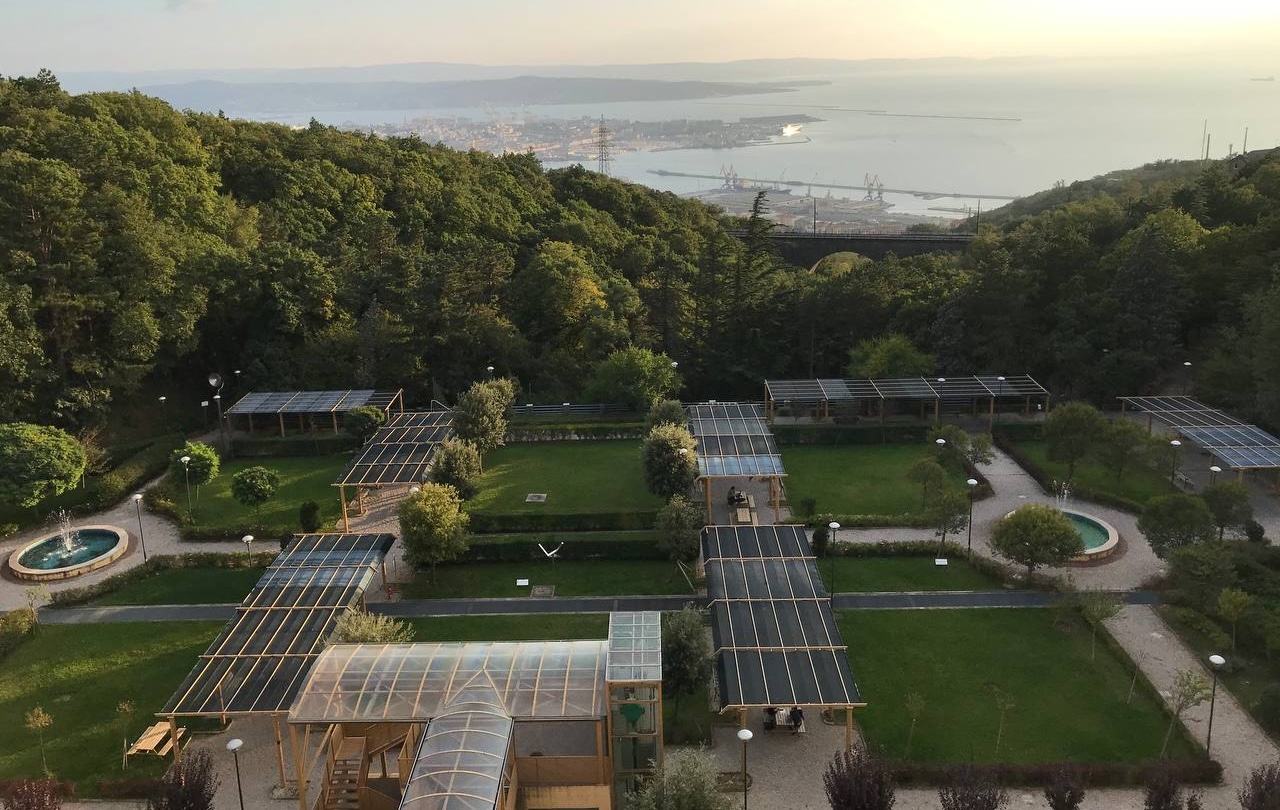
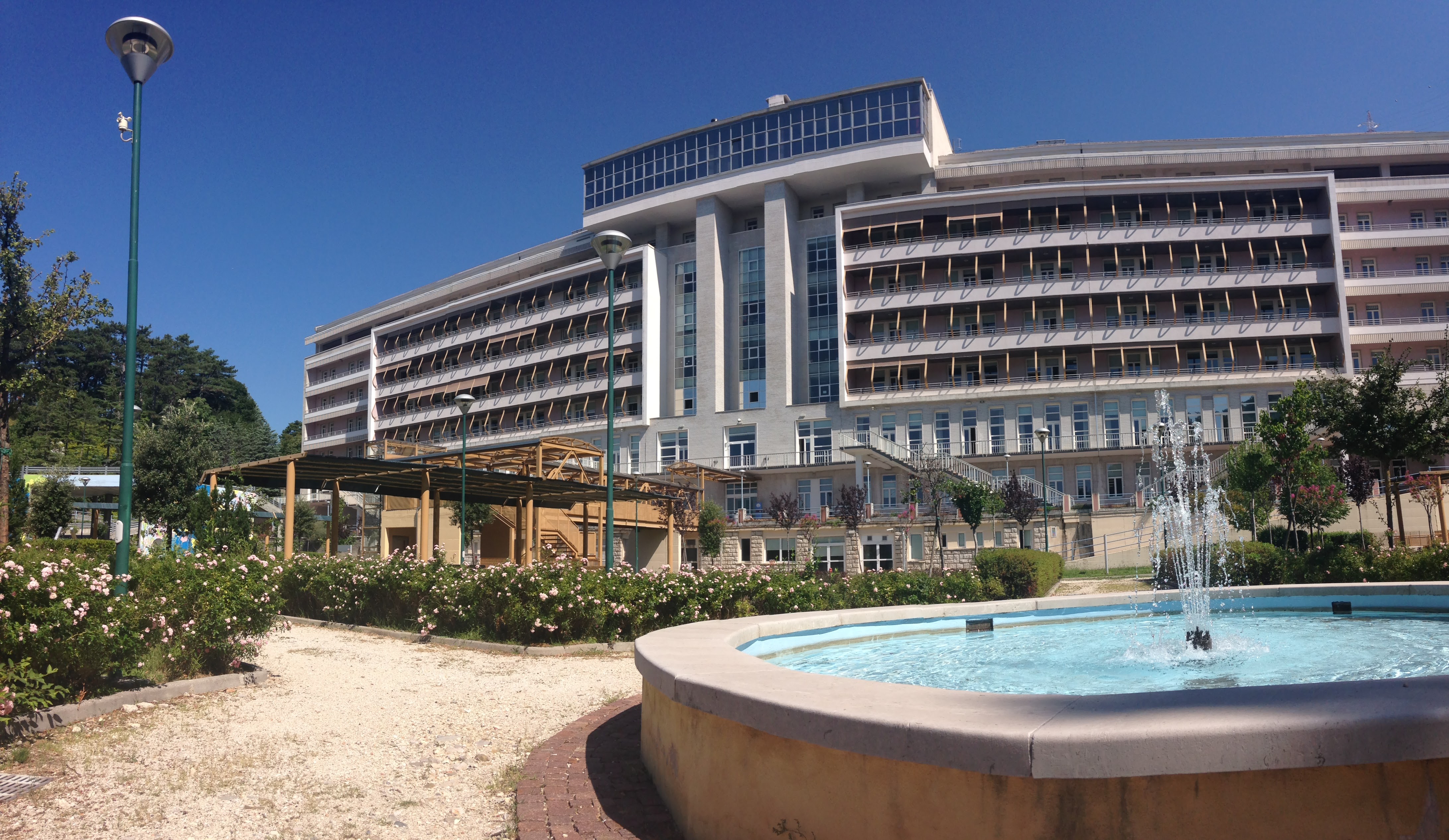
SISSA research center in Trieste (Italy).